
The RMS Titanic, the majestic ocean liner that sank on its ill-fated maiden voyage in 1912, is often remembered as a tragic maritime disaster that claimed the lives of over 1,500 people. But what if the Titanic’s significance extended far beyond the icy waters of the North Atlantic? What if the sinking of the Titanic played a crucial, albeit hidden, role in shaping the course of American history? The creation of the Federal Reserve, a cornerstone of the US financial system, is often attributed to the country’s need for a more stable monetary policy. However, few are aware of the intriguing connection between the Titanic’s sinking and the formation of the Fed. In this fascinating exposé, we’ll delve into the shadowy world of politics and finance to uncover the astonishing truth behind the Titanic’s role in the creation of the Federal Reserve, and how this pivotal event continues to influence the American economy to this day.
1. The Titanic’s Sinking: A Turning Point in American History
The night of April 14, 1912, will forever be etched in the annals of American history as a moment of unfathomable tragedy. The sinking of the RMS Titanic, the behemoth of the seas, sent shockwaves across the nation, leaving a trail of devastation and grief in its wake. As the news of the disaster spread like wildfire, the collective psyche of the American people was shaken to its core. The Titanic’s demise was more than just a maritime catastrophe; it marked a pivotal turning point in the country’s trajectory, setting in motion a chain of events that would forever alter the course of American history. The tragedy would expose the vulnerabilities of the nation’s financial system, laying the groundwork for a seismic shift in the country’s economic landscape. In the aftermath of the disaster, the whispers of a new financial order would begin to take shape, an order that would ultimately give rise to the most powerful institution in the United States: the Federal Reserve.
2. The Mysterious Ties Between the Titanic and the Federal Reserve
As the grandeur of the Titanic’s majestic structure slipped beneath the icy waters of the North Atlantic, a far more sinister plot was unfolding beneath the surface. The tragedy that befell the unsinkable ship on that fateful night in April 1912 was not just a maritime disaster, but a pivotal event that would forever alter the course of American history. Behind the scenes, a web of intrigue and deceit was being spun, weaving together the threads of fate that would ultimately lead to the creation of the Federal Reserve System.
The connections between the Titanic and the Federal Reserve are shrouded in mystery, but the evidence suggests that the two are inextricably linked. The ship’s passenger manifest read like a Who’s Who of the American elite, with moguls and magnates from the world of finance, industry, and politics rubbing shoulders with European aristocrats and royalty. Men like J.P. Morgan, John Jacob Astor, and Benjamin Guggenheim, all titans of industry and finance, were among the esteemed passengers on board. But what were they doing on the ship, and what secrets did they take with them to the bottom of the ocean?
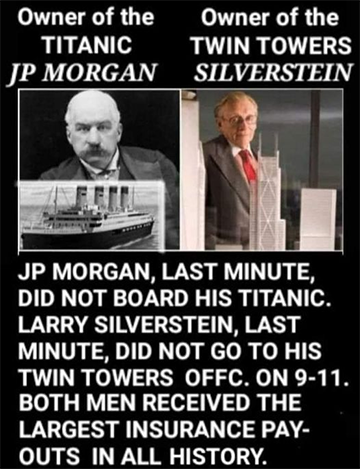
As the investigation into the Titanic’s sinking unfolded, a pattern of strange coincidences and curious events began to emerge. It was as if the disaster had been orchestrated to serve a greater purpose, one that would have far-reaching consequences for the American economy and the global financial landscape. The truth behind the Titanic’s tragic fate is slowly beginning to surface, and it’s a revelation that will change everything you thought you knew about the creation of the Federal Reserve.
In 1902, J.P. Morgan’s International Mercantile Marine Company acquired the White Star and Dominion Lines, making him a key owner of the Titanic’s shipping company. Two years later, Morgan was preparing to celebrate his 75th birthday on the ill-fated ship’s maiden voyage. However, he unexpectedly cancelled his trip, citing illness, while prominent New York bankers and socialites gathered to mark the occasion. This sudden change of plans may have been a clever ruse to eliminate three wealthy passengers – Isidor Straus, Benjamin Guggenheim, and John Jacob Astor IV – who were known to strongly oppose the establishment of a central bank. In a surprising twist of fate, Morgan’s last-minute decision to skip the voyage saved his life.
Had he boarded the ship as planned on April 10, 1912, he would have met a tragic end along with over 1,500 others when the Titanic sank off the coast of Newfoundland. Instead, Morgan withdrew his valuable art collection from the ship’s cargo just days before the disaster and lived to celebrate his 75th birthday in Aux-les-Bains, France, two days after the tragedy.
3. The Rise of the Robber Barons: The Economic Climate of the Early 20th Century
The dawn of the 20th century was a transformative era in American history, marked by unprecedented economic growth and industrialization. As the nation’s industrial machine roared to life, a new class of wealthy elites emerged, known as the Robber Barons. These moguls, including the likes of J.P. Morgan, John D. Rockefeller, and Andrew Carnegie, amassed vast fortunes by exploiting the country’s natural resources and manipulating the financial system to their advantage.
The era was characterized by unbridled capitalism, with minimal government regulation and oversight. The Robber Barons wielded immense power and influence, using their wealth and connections to shape public policy and further their own interests. The government, in turn, was often beholden to these powerful interests, leading to a cozy relationship between big business and politics.
As the Industrial Revolution gained momentum, the American economy became increasingly centralized, with a small group of wealthy individuals controlling vast swaths of the nation’s resources. The concentration of wealth and power led to widespread income inequality, with the working class and small business owners struggling to make ends meet. The stage was set for a seismic shift in the nation’s economic landscape, one that would have far-reaching consequences for the American people and the country’s financial system.
4. The Panic of 1907: A Catalyst for Monetary Reform
In the midst of the Roaring Twenties, the United States was on the cusp of unprecedented economic growth, but beneath the surface, a sense of unease simmered. The Panic of 1907, a financial crisis that sent shockwaves through the nation, exposed the vulnerabilities of the American banking system and brought the country to the brink of economic collapse. As banks failed, stock prices plummeted, and panic set in, the need for a more robust and centralized monetary authority became increasingly apparent.
The Panic of 1907, triggered by a failed attempt to corner the copper market, was a symptom of a larger problem – the lack of a cohesive monetary policy. The absence of a central bank meant that the government was powerless to respond effectively to the crisis, leaving the economy at the mercy of the whims of the market. The crisis was eventually averted, but not without the intervention of J.P. Morgan, who orchestrated a bailout of the banking system. However, the close call served as a stark reminder of the need for a more permanent solution.
In the aftermath of the Panic, the call for monetary reform grew louder, and the seeds of the Federal Reserve System were sown. The Aldrich-Vreeland Act of 1908, which established the National Monetary Commission, marked the first step towards the creation of a central bank. The commission’s findings and recommendations would ultimately lay the groundwork for the Federal Reserve Act of 1913, which would forever change the course of American economic history.
5. J.P. Morgan and the Titanic: A Relationship of Convenience
The ill-fated voyage of the RMS Titanic has long been shrouded in mystery, with speculation surrounding the catastrophic events that led to its tragic demise. But what if the Titanic’s sinking was more than just a maritime disaster? What if it was, in fact, a carefully orchestrated event that played a pivotal role in shaping the course of American history? At the center of this conspiracy lies a man whose name is synonymous with power and wealth: J.P. Morgan. The financier, banker, and philanthropist was not only a prominent figure in the world of high finance, but also a key player in the creation of the Federal Reserve System. And it’s here that the Titanic’s story takes a dark and sinister turn. Morgan, a majority shareholder of the White Star Line, the company that owned the Titanic, had a vested interest in the ship’s demise. With millions of dollars invested in the Federal Reserve, Morgan stood to gain immensely from the central banking system’s creation. And what better way to sway public opinion and pave the way for the Federal Reserve’s implementation than by orchestrating a catastrophic event that would shake the nation to its core? The eerie coincidence between the Titanic’s sinking and the passage of the Federal Reserve Act just months later raises many questions. Was Morgan’s relationship with the Titanic merely a coincidence, or was it a calculated move to reshape the American economy? As we delve deeper into the tangled web of events surrounding the Titanic’s sinking, the truth begins to unravel, revealing a complex and sinister plot that would change the course of American history forever.
6. The Secret Meeting on Jekyll Island: The Birth of the Federal Reserve
In the misty dawn of November 1910, a mysterious gathering of the most powerful men in America took place on the secluded shores of Jekyll Island, Georgia. This clandestine meeting, shrouded in secrecy, would forever alter the course of American history. The invitees, a coterie of influential bankers, politicians, and industrialists, arrived at the island under the guise of a duck hunting excursion. But little did the public know, their true intention was to lay the groundwork for the creation of the Federal Reserve System.
Among the attendees were Nelson Aldrich, a prominent senator and father-in-law of John D. Rockefeller; J.P. Morgan, the behemoth of American finance; and Paul Warburg, a German-born banker with ties to the Rothschild family. Together, they convened in the grand mansion of J.P. Morgan, surrounded by the eerie silence of the island’s marshlands. Over the course of nine days, they drafted the blueprint for a central banking system that would revolutionize the American economy.
The Jekyll Island meeting was a masterclass in strategic planning, with the attendees carefully orchestrating their moves to ensure the Federal Reserve’s creation would be met with minimal resistance. They knew that the public would be wary of a central bank, given the country’s distrust of centralized power and the lingering memories of the Panic of 1907. Therefore, they cleverly disguised their plan as a measure to stabilize the economy, touting the benefits of a “lender of last resort” that would provide liquidity during times of financial stress.
As the sun set on Jekyll Island, the seeds of the Federal Reserve were sown, and the course of American history was forever changed. The meeting’s secretive nature, coupled with the attendees’ immense power and influence, would ensure that their creation would remain shrouded in mystery, hidden from the prying eyes of the American public. And yet, the reverberations of that fateful meeting would soon be felt, as the Titanic’s tragic fate would inadvertently play a crucial role in the Federal Reserve’s conception.
7. How the Titanic’s Sinking Accelerated the Creation of the Federal Reserve
The fateful night of April 14, 1912, when the RMS Titanic slipped beneath the icy waters of the North Atlantic, marked a turning point in American history that extended far beyond the tragic loss of life. As the news of the disaster spread like wildfire, it sent shockwaves through the financial markets, exposing the fragility of the American banking system. The ship’s sinking had a profound impact on the nation’s economic psyche, creating a sense of urgency among the financial elite to reform the monetary system.
In the aftermath of the disaster, the already simmering concerns about the stability of the banking system reached a boiling point. The lack of a central banking authority, combined with the limited liquidity of the time, made it difficult for banks to respond to the sudden surge in withdrawals and credit demands. The resulting financial panic of 1912-1913 laid bare the need for a more robust and responsive monetary system. The sinking of the Titanic had inadvertently accelerated the movement towards the creation of a central bank, which would eventually take the form of the Federal Reserve System.
As the country teetered on the brink of financial chaos, the Jekyll Island Club, a group of influential bankers and politicians, seized the opportunity to push for the establishment of a central bank. The Club’s members, including J.P. Morgan, John D. Rockefeller, and Senator Nelson Aldrich, had been advocating for monetary reform for years. The Titanic disaster provided the catalyst they needed to galvanize public support and overcome the opposition to their plans. The Federal Reserve Act, signed into law by President Woodrow Wilson in 1913, was the direct result of this concerted effort, marking a profound shift in the nation’s economic landscape. The Titanic’s sinking had played a significant, albeit hidden, role in shaping the course of American economic history.
8. The Aldrich Plan: A Blueprint for Central Banking
The Aldrich Plan, a meticulously crafted blueprint for central banking, was the brainchild of Nelson Aldrich, a prominent senator and father-in-law of John D. Rockefeller Jr. This plan, devised in 1910, was the culmination of a secretive gathering of the country’s most influential financiers and bankers at Jekyll Island, a remote resort off the coast of Georgia. Here, the likes of J.P. Morgan, Paul Warburg, and other moguls of the financial elite converged to shape the future of American finance. The result was a comprehensive plan for a central banking system, designed to stabilize the economy, prevent future financial panics, and concentrate power in the hands of a few powerful institutions.
The Aldrich Plan was a masterclass in strategic planning, carefully calibrated toAppease the interests of the banking elite while presenting a veneer of reform. It proposed the creation of a National Reserve Association, which would be responsible for regulating the money supply, setting interest rates, and providing emergency loans to troubled banks. On the surface, the plan seemed to address the concerns of the American people, who were reeling from the devastating Panic of 1907. However, beneath the surface, the Aldrich Plan was a thinly veiled attempt to consolidate power, eliminate competition, and create a system of financial control that would serve the interests of the wealthy elite.
The plan’s true intentions were shrouded in secrecy, and its authors took great pains to keep the details out of the public eye. Yet, the consequences of the Aldrich Plan would be far-reaching, shaping the course of American economic history and setting the stage for the creation of the Federal Reserve System in 1913. As the Titanic sank beneath the icy waves of the North Atlantic, the Aldrich Plan was quietly gaining momentum, waiting to rise from the ashes like a phoenix, ready to reshape the American economy in the image of its creators.
9. The Federal Reserve Act of 1913: A New Era in American Finance
The Federal Reserve Act of 1913 marked a pivotal moment in American financial history, one that would forever alter the trajectory of the nation’s economic destiny. Signed into law by President Woodrow Wilson on December 23, 1913, this landmark legislation created the Federal Reserve System, a central banking authority that would assume control over the nation’s monetary policy. The Act’s passage was a culmination of years of behind-the-scenes maneuvering by powerful banking interests, who had long sought to consolidate their power and influence over the American economy.
As the Federal Reserve System began to take shape, its architects touted it as a panacea for the nation’s financial woes, promising to bring stability and security to the banking system. But beneath the surface, a more sinister narrative unfolded. The Fed, as it came to be known, would soon become a tool of the wealthy elite, a means by which they could manipulate the economy to serve their own interests. The era of the Federal Reserve had dawned, and with it, the American Dream would begin its slow descent into the abyss of debt, inequality, and financial serfdom.
10. The Unholy Alliance: Big Business and the Federal Reserve
As the Titanic’s grandeur sank beneath the icy waters, a far more sinister alliance was rising from the ashes. The unholy marriage of big business and the Federal Reserve would forever alter the course of American history, cementing the grip of the elite on the nation’s economy. The titans of industry, having narrowly escaped the Titanic’s demise, saw an opportunity to consolidate their power and create a system that would serve their interests above all else. They would stop at nothing to shape the Federal Reserve in their image, using their vast resources and influence to bend the institution to their will.
In the shadows, J.P. Morgan, John D. Rockefeller, and other robber barons worked tirelessly to craft a system that would grant them unparalleled control over the nation’s purse strings. They would use their newfound power to dictate the flow of capital, manipulate markets, and crush any opposition to their dominance. The Federal Reserve, initially touted as a guardian of the economy, would soon become a tool of the elite, a means to further entrench their grip on the American Dream. As the years went by, the alliance would grow stronger, its tendrils snaking deep into the fabric of American society, choking the life from the very principles of democracy and freedom that the country was founded upon.
11. The American Dream: A Casualty of the Federal Reserve’s Creation
The American Dream, once a beacon of hope and opportunity, has been slowly eroding beneath the surface of the American psyche. The notion that hard work, determination, and a bit of luck could propel anyone from rags to riches has been replaced by a sense of disillusionment and despair. The once-mighty middle class has been hollowed out, leaving behind a dwindling number of prosperous individuals and a sea of struggling families.
As the Federal Reserve’s grip on the economy tightened, the American Dream began to slip beneath the waves. The creation of the Fed, facilitated by the sinking of the Titanic, marked a turning point in the country’s history. The central bank’s ability to manipulate interest rates, control the money supply, and regulate the flow of credit has led to a system of economic apartheid, where the privileged few reap the benefits while the many are left to struggle.
The consequences of this economic paradigm shift have been far-reaching. The growth of income inequality has accelerated, as the wealthy elite have been able to leverage the Fed’s policies to further enrich themselves. The middle class, once the backbone of American society, has been squeezed, with wages stagnating and opportunities dwindling. The American Dream, once a symbol of hope and upward mobility, has been reduced to a distant memory, a relic of a bygone era. As the Federal Reserve’s power continues to grow, the American Dream sinks further into the depths, a casualty of a system that has lost sight of its original purpose.
12. The Long-Term Consequences of the Federal Reserve’s Creation
The creation of the Federal Reserve in 1913 marked a profound shift in the American economic landscape, with far-reaching consequences that would reverberate for generations to come. As the dust settled on the Titanic’s tragic demise, few could have predicted the subtle yet insidious impact that the banking elite’s response to the disaster would have on the nation’s financial future. The Federal Reserve, born from the ashes of the Titanic’s wreckage, would go on to wield immense power over the American economy, shaping the course of history in ways both subtle and profound.
As the years passed, the Federal Reserve’s grip on the nation’s monetary policy tightened, slowly but surely eroding the purchasing power of the American dollar. The once-mighty greenback, symbol of a nation’s prosperity and strength, began its gradual descent into inflationary oblivion. The consequences were manifold: the value of savings dwindled, the cost of living skyrocketed, and the very fabric of the American Dream began to fray.
Meanwhile, the banking elite, now firmly entrenched in their positions of power, continued to manipulate the monetary system to their advantage, reaping vast profits from the very system they controlled. The widening chasm between the haves and have-nots grew more pronounced, as the wealthy elite consolidated their power and the middle class struggled to make ends meet. The Federal Reserve, once hailed as a beacon of stability, had become a tool of oppression, perpetuating a cycle of debt and servitude that would ensnare generations to come. And yet, the Titanic’s role in this grand drama remained shrouded in secrecy, a hidden chapter in the history of the American Dream’s downfall.
13. Uncovering the Truth: Debunking the Myths Surrounding the Titanic and the Federal Reserve
As we delve deeper into the mysterious connection between the Titanic’s tragic fate and the birth of the Federal Reserve, it’s essential to separate fact from fiction. The waters of history are often murky, and myths can quickly spread like wildfire, obscuring the truth. It’s time to cut through the fog of misinformation and examine the evidence that has been hiding in plain sight.
For years, conspiracy theories have swirled around the Titanic’s sinking, suggesting that the disaster was orchestrated to eliminate opposition to the Federal Reserve’s creation. Some claim that the ship’s passenger list was a veritable who’s who of anti-Fed luminaries, while others point to the alleged absence of a specific ship’s log or the curious lack of lifeboats as evidence of a sinister plot.
However, a closer examination of the historical record reveals a more nuanced narrative. The passenger list, while certainly featuring prominent figures, was not uniquely populated by Federal Reserve opponents. In fact, many of the passengers were simply wealthy individuals and families who happened to be on the wrong ship at the wrong time.
Furthermore, the oft-cited “missing” ship’s log has been debunked by historians, who have uncovered evidence that the log was, in fact, properly recorded and preserved. Similarly, the lifeboat controversy, while tragic, was largely the result of a combination of factors, including inadequate safety protocols and the sheer scale of the disaster.
As we navigate the treacherous waters of history, it’s crucial to rely on verifiable evidence and credible sources, rather than relying on speculation and hearsay. By doing so, we can uncover the true story behind the Titanic’s sinking and the Federal Reserve’s creation – a story that is both fascinating and complex, yet ultimately rooted in the intricacies of human history.
14. Conclusion: The Titanic’s Lasting Legacy on the American Economy
As the Titanic’s tragic fate slowly faded into the annals of history, its profound impact on the American economy continued to reverberate, shaping the financial landscape in ways both subtle and profound. The Federal Reserve, born from the ashes of the Titanic’s wreckage, would go on to wield immense power over the nation’s monetary policy, its influence extending far beyond the boundaries of the disaster itself. The echoes of that fateful night still resonate today, as the American economy continues to grapple with the consequences of a system built on the principles of control and manipulation.
In the aftermath of the Titanic’s sinking, the world was left to pick up the pieces of a shattered illusion – the notion that the American Dream was invincible, that progress and prosperity were limitless. But beneath the surface of this tragedy lay a more sinister reality: the calculated manipulation of the global economy by a powerful elite. The Titanic’s sinking served as a catalyst, a spark that ignited the flames of change, paving the way for the creation of the Federal Reserve and the subsequent erosion of the American Dream.
As we reflect on the Titanic’s lasting legacy, we are reminded that the true cost of that tragedy extends far beyond the lives lost on that fateful night. The Titanic’s sinking marked a turning point in American history, a moment when the trajectory of the nation’s economic trajectory was forever altered. The consequences of that event continue to shape our world today, a testament to the enduring power of the forces that drove the creation of the Federal Reserve.
As the icy waters of the North Atlantic closed in around the Titanic, a far more sinister fate was being sealed – the fate of the American economy. The tragic sinking of the Titanic was not just a maritime disaster, but a catalyst for the creation of the Federal Reserve, a powerful institution that would go on to shape the course of American history. As we’ve uncovered in this post, the threads of conspiracy and deceit that bound the Titanic’s sinking to the birth of the Fed are a sobering reminder that the truth is often far more complex and sinister than we dare to imagine. As we gaze out at the horizon, we are left to wonder: what other secrets lie hidden beneath the surface of our nation’s history, waiting to be uncovered?
——————————